
Fastpitch Exit Velocity by Age: A Softball Benchmark Chart

June 16, 2026 · 6 min read
The short answer
Fastpitch exit velocity off a tee runs from roughly 30-40 mph at 8U up to 60-72+ mph for a strong high schooler. The numbers run lower than baseball at every age, that is normal, so never measure a softball hitter against a baseball chart. Treat any single reading as a ballpark and watch the trend over weeks.
Type "exit velocity by age" into anything and you get baseball charts: BBCOR bats, 90-foot bases, a ball coming in overhand. None of that is your Sunday. This one is fastpitch first.
Fastpitch exit velocity by age (chart)
Approximate, off a tee. Live pitching usually reads a touch higher with timing, a touch lower with a tough riseball.
| Age / level | Typical average | Strong (top ~10%) |
|---|---|---|
| 8U | 30-40 mph | 43+ mph |
| 10U | 38-48 mph | 52+ mph |
| 12U | 46-55 mph | 60+ mph |
| 14U | 53-63 mph | 68+ mph |
| High school | 60-72 mph | 75+ mph |
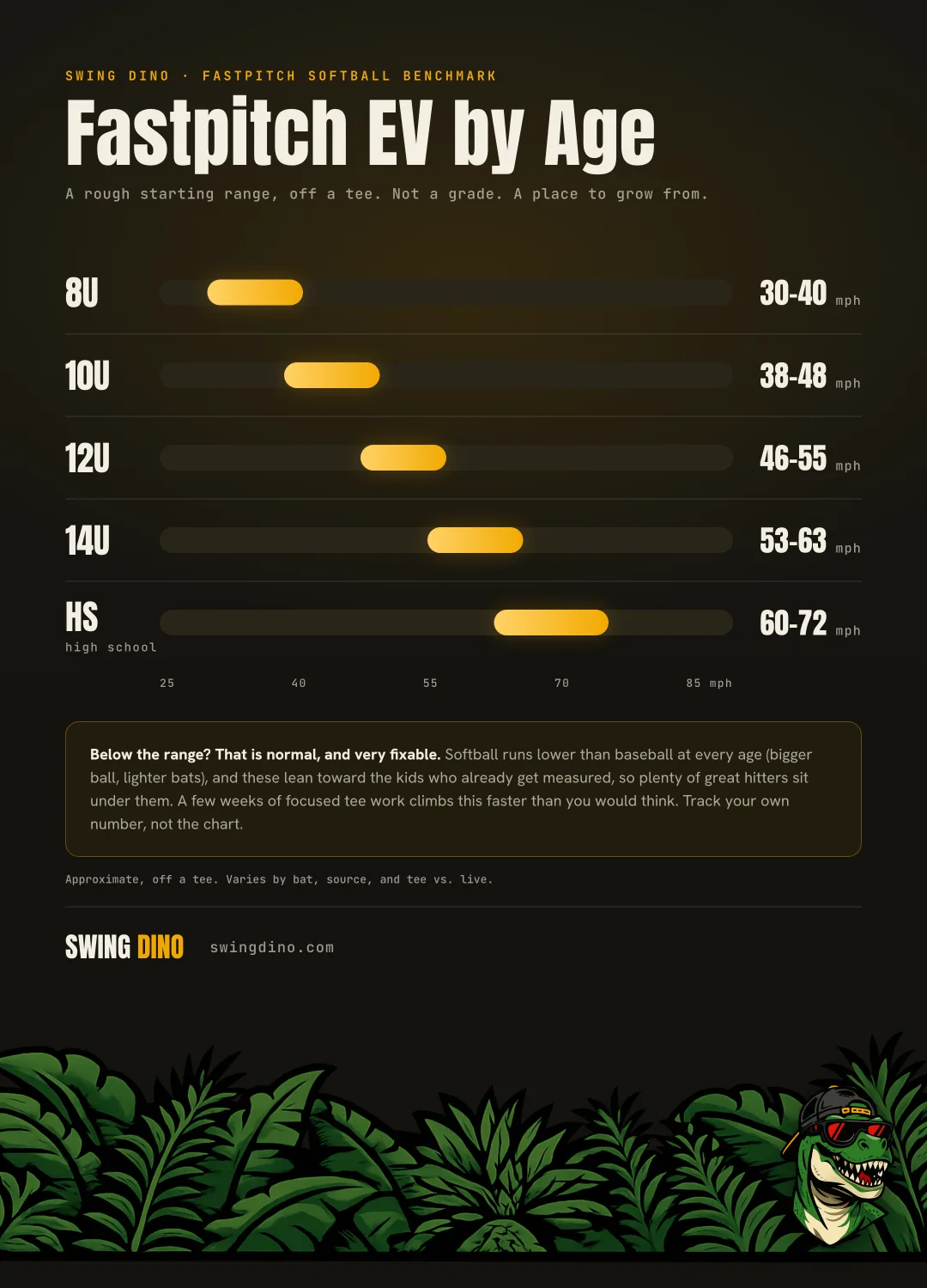
Softball benchmarks are thinner and less standardized than baseball's, so these are honest ballparks, not gospel. The trend matters more than the line.
Why softball numbers run lower than baseball
Three reasons, none of them about the athlete. The ball is bigger and heavier (12 inches), the bats are lighter drop bats, and the swing is built for a riseball plane from 43 feet, not a four-seam from 60. Same kid, same effort, a lower number than her brother. That is the game, not a gap in ability.
Slapper vs. power hitter: read it differently
A power hitter lives and dies on exit velocity, so chase it. A slapper wins with speed out of the box and bat-to-ball quickness, where raw exit velo is far down the list. If your daughter slaps, track her bat speed and her consistency, and let exit velocity be one input rather than the headline.
What counts as a "good" number
"Good" is "better than last month." The most useful thing you can do with any of these numbers is stop comparing your kid to the chart and start comparing her to herself. A hitter climbing from 48 to 53 over a season is winning, regardless of where she sits on a table built from someone else's daughters.
How to measure it for free
You do not need a $300 radar gun. A phone, a tee, and a side-on clip will get you an honest exit velocity for free. We wrote up how to measure exit velocity at home, and the same five framing habits apply to fastpitch. A tee does not know the difference.
Frequently asked questions
What is a good fastpitch exit velocity by age?
Off a tee, roughly: ~43+ mph is strong for an 8U hitter, ~60+ mph for 12U, ~68+ mph for 14U, and 75+ mph for a strong high schooler. These are approximate ranges that vary by bat, by tee vs. live, and by whether the hitter is a slapper or a power hitter.
Why is softball exit velocity lower than baseball at the same age?
A few reasons: a bigger 12-inch ball, lighter drop bats, and a different swing plane built for a riseball from 43 feet. Same athlete, different game, lower number. Compare a hitter to other fastpitch hitters, never to a baseball chart.
Does exit velocity matter for a slapper?
Less than for a power hitter. A slapper wins with bat-to-ball speed out of the box, not raw exit velo. Track her bat speed and her consistency, and read exit velocity as one input, not the scoreboard.
Track her exit velocity for free
SwingDino reads the exit velo off the tee and charts the trend, free on iPhone during the beta.
Sign up for the beta