
How to Measure Exit Velocity at Home (No Radar Gun Needed)

June 11, 2026 · 5 min read
The short answer
You can measure exit velocity at home off a tee three ways: a pocket radar, a sensor launch monitor, or a camera app on your phone. No batting cage required, the key is using the same setup every time so the number actually means something.
What you're actually measuring
Exit velocity is the ball's speed the instant it leaves the bat. To capture it at home you need a tool that reads that first split-second of flight, and a setup repeatable enough that today's number can be fairly compared to next week's. (For what the numbers mean by age, see our exit velocity by age chart.)
The three ways to measure it
1. Pocket radar / radar gun
A pocket radar uses Doppler to clock the ball. Stand behind or beside the hitter and point it down the line of the hit. It's portable and proven, but it reads one number with no record of the swing, and angle matters a lot for accuracy.
2. Sensor launch monitors and bat sensors
Devices like cage-mounted launch monitors and bat-knob sensors measure exit velo (and often bat speed) with hardware. They're accurate but pricey, and bat sensors add weight to the bat. We break the options down in our comparison of swing trackers.
3. A camera app on your phone
Newer apps track the ball across video frames to compute exit velocity, no extra hardware. You set your phone on a small tripod to the side, facing the plate, and swing off the tee. It's the cheapest setup and it keeps a record of every swing, not just one reading. That is exactly how SwingDino's exit velocity reader works.
How to get a number you can trust
- Pick one setup. Same tee height, same ball, same spot, every session.
- Measure off a tee. It removes pitch speed and timing, so you're testing the swing, not the pitch.
- Take several swings. One reading is noise; a handful shows the real range.
- Track the trend. A single number is far less useful than watching it climb over weeks.
This is exactly why we built SwingDino as a trend tracker, not a radar gun: it's built for honest, repeatable readings you can actually compare.
The phone setup, step by step
See the How it works walkthrough for the exact placement, but the short version: phone on a stand to the side of the plate, about 5-10 feet away, level and side-on to the tee. Nail these five framing habits and the read comes back honest.
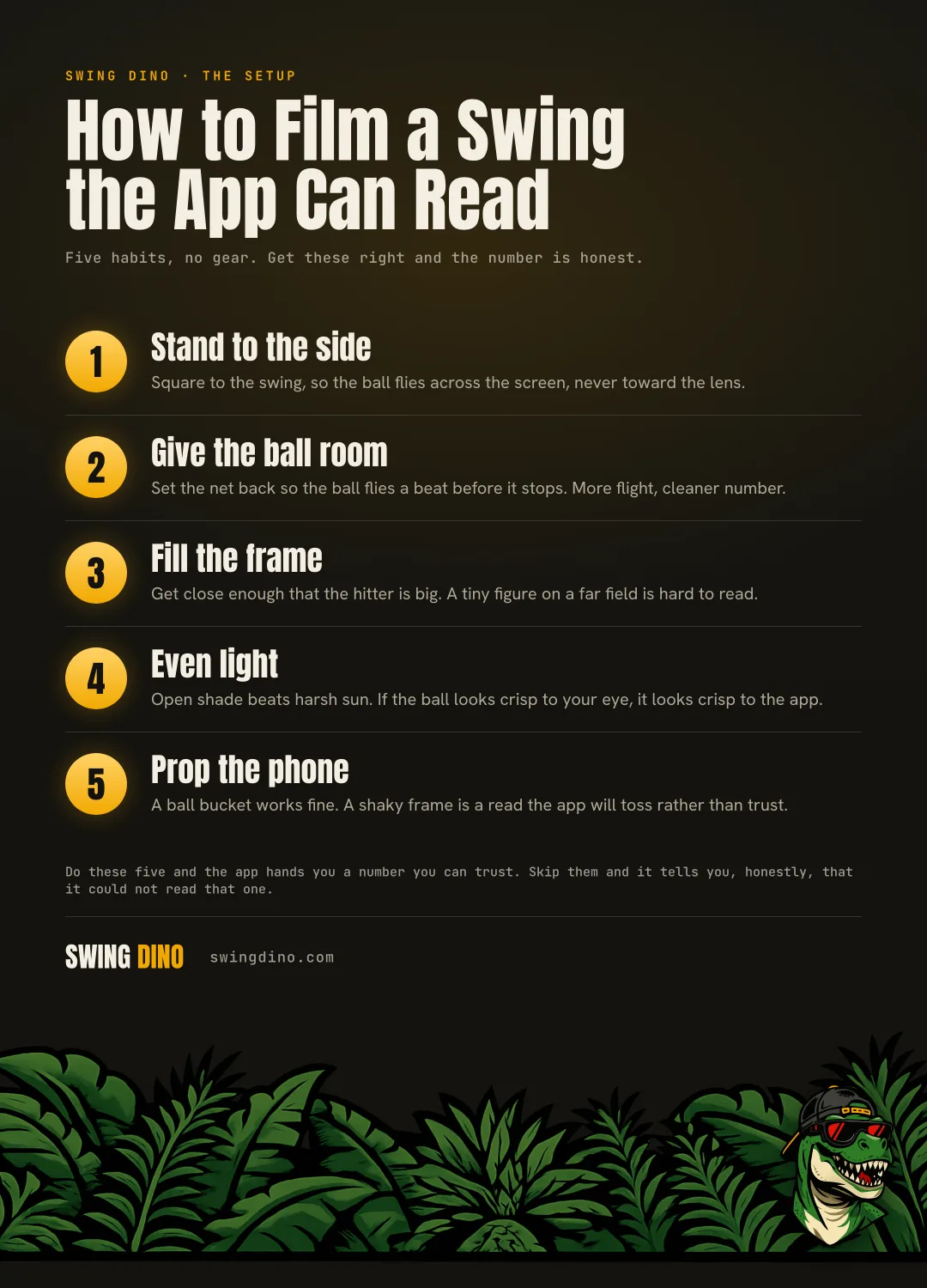
Try it free in the betaand you'll have an exit-velo reading on your kid's next swing.
Frequently asked questions
How is exit velocity measured?
Exit velocity is measured by clocking the ball's speed the instant it leaves the bat. Tools do this three ways: a radar gun/pocket radar (Doppler), a sensor-based launch monitor, or a camera app that tracks the ball across frames. All three work off a tee at home.
How do you measure exit velocity off a tee?
Set the tee at the same height every time, position your measuring tool to the side facing the plate, and take several swings. Use the same tee, ball, and spot each session so the readings are comparable.
Do you need a radar gun to measure exit velocity?
No. A pocket radar is one option, but camera-based phone apps now measure exit velocity off a tee without any extra hardware, you just set your phone on a stand to the side.
Measure your exit velo with your phone
SwingDino reads the exit velo off the tee and charts the trend, free on iPhone during the beta.
Sign up for the beta