
Exit Velocity Drills by Age: What Actually Works from Tee Ball to Varsity

July 4, 2026 · 8 min read
The short answer
The best exit velocity drills change with age. At 6-8, square the ball up off a tee and keep it fun. At 9-11, structured tee blocks and a hips-first swing add real ball speed. At 12-14, overload/underload bat work and rotational strength take over. In high school, max-intent swings with a consistency floor separate cage heroes from lineup locks. At every age, the proof is the same: the average climbs and the swings bunch closer together.
Plenty of hitting drills feel productive. Far fewer actually move the number. The difference is rarely the drill itself. It's matching the drill to the kid's age, then measuring whether anything changed.
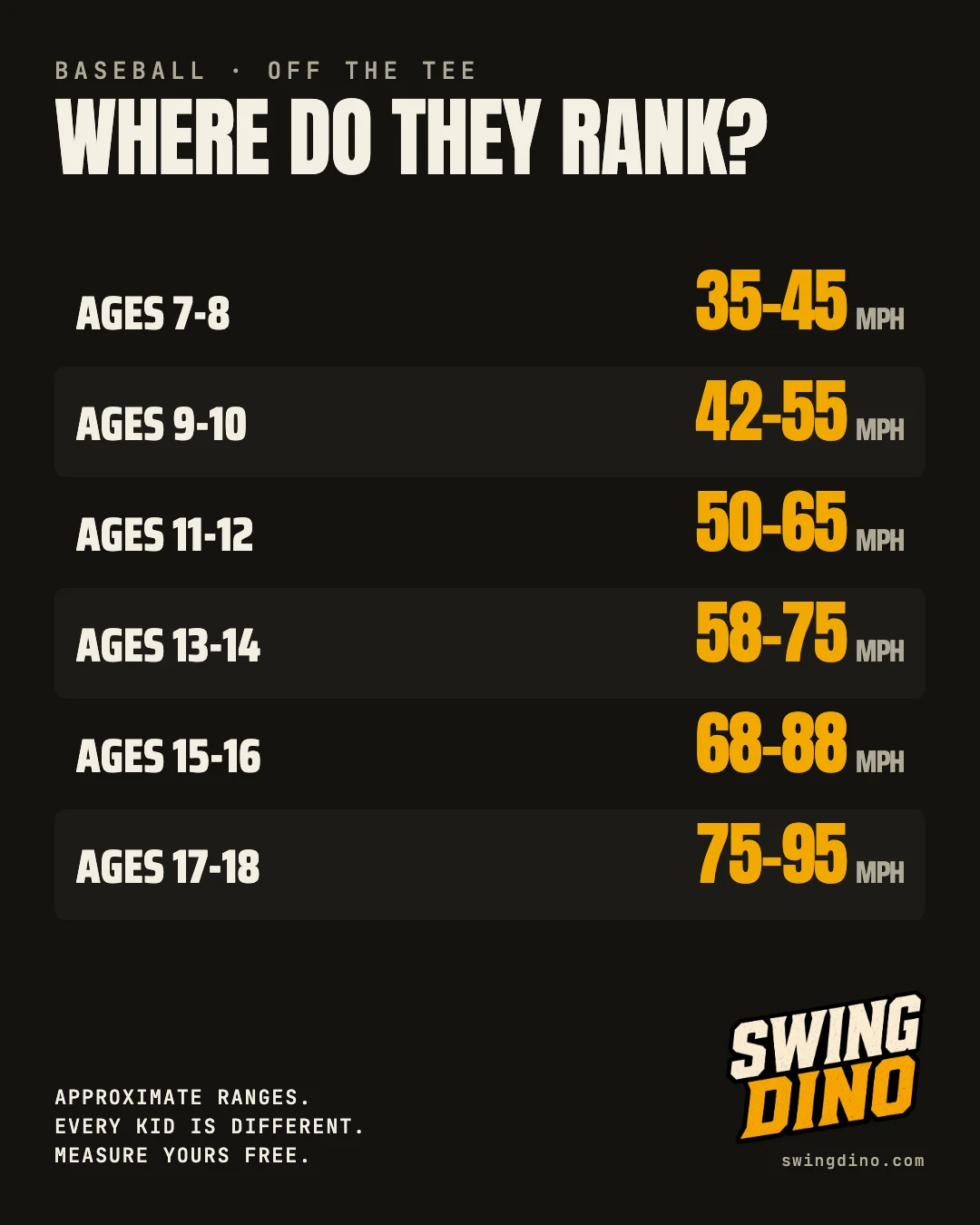
Below: two drills per age band, each with the setup, the rep count, and what improvement should look like in the numbers. One honesty note first: every figure here is an approximate range off a tee. Published youth numbers vary by source, bat, and method, so treat them as ballpark guides, not cutoffs. Our exit velocity by age chart covers the full picture.
How to tell a drill is working
Take a baseline before you change anything. Ten swings off a tee, same tee height, same ball, same spot in the yard. Write down (or measure with your phone) every reading, the mis-hits included.
Then watch two things over the next few weeks:
- The average. Not the max. One 64 mph rocket from a 10-year-old is a lottery ticket. A ten-swing average that climbs a few mph is a better hitter.
- The spread.This is the one most parents and coaches skip, and it's the most useful. When a drill is genuinely working, the gap between a hitter's best swing and typical swing shrinks. If the average jumps but the spread blows wide open, the kid is selling out for max readings, and that shows up later as whiffs in games.
Consistency is the tell, which is why SwingDino makes it the headline metric instead of a max-velo leaderboard. A drill that tightens the spread is changing the swing. A drill that produces one loud outlier is changing nothing.
Ages 6-8: make contact, make it a game
At this age, exit velocity training is not a thing, and it shouldn't be. The drill is contact. The number is for the grown-ups, and most kids this age hit somewhere in the 30s up into the mid 40s off a tee, with wide variation that means almost nothing yet. The goal is a repeatable swing without anyone saying the word "mechanics." (This is also the age where turning reps into a backyard home run derby buys you twenty extra swings a session for free.)
Drill 1: Smash Count
Setup: Tee at mid-thigh, ball over the middle of the plate, hitting into a net or open grass.
Reps:10 swings. The kid counts their own "smoked ones," meaning anything hit hard on a line. Dribblers and pop-ups don't count. Best score wins a snack.
What improvement looks like: Forget the mph for a second. Improvement is the smash count going from 3 out of 10 to 6 or 7 over a few weeks. If you are measuring, the low readings disappear. The average creeps up not because the best swing got better, but because the worst swings stopped happening.
Drill 2: Freeze Finish
Setup: Same tee, same height. The only rule: after every swing, the hitter freezes their finish and holds it for a slow two-count without falling over.
Reps:2 rounds of 8. If they wobble, the rep doesn't count, which 7-year-olds find hilarious and weirdly motivating.
What improvement looks like: Balance is the cheapest exit velo there is at this age. A kid who finishes balanced is swinging in sequence instead of lunging. The spread tightens first, then the average drifts up behind it.
Ages 9-11: structure shows up
This is where a real baseline becomes worth keeping. Most 9 to 11 year olds land somewhere in the mid 40s to low 60s off a tee, again a rough range. The lower half starts doing actual work now, so the drills target sequencing: legs and hips first, hands last.
Drill 1: The Ten-Swing Test
Setup: Tee at mid-thigh, ball middle of the plate, identical setup every single session. Same tee, same ball, phone or radar in the same spot. Repeatability is the whole drill.
Reps: 10 measured swings, once a week. Not more. This is a test, not a workout, and a full week between tests gives the training time to actually show up in the number.
What improvement looks like:This drill doesn't add exit velo by itself; it's the scoreboard for everything else. A real gain at this age is the ten-swing average climbing a few mph over a month while the spread holds or shrinks. If six weeks pass and nothing moves, change the training, not the test.
Drill 2: Stride-and-Pause
Setup: Regular tee setup. The hitter strides and lands, then pauses for a full second with hands still loaded before swinging.
Reps: 3 rounds of 6, with regular swings mixed in between rounds so the feel transfers.
What improvement looks like: Kids this age leak power by drifting forward and swinging with all arms. The pause forces the legs to load and the hands to wait. When it clicks, the average rises within a few weeks without the kid visibly swinging harder. Easy power is sequencing power.
Ages 12-14: bat speed takes over
Bodies change fast here, and so do the numbers. Rough tee ranges run from the mid 50s to the mid 70s, with big differences between an early-blooming 13-year-old and a late one. The limiting factor is usually bat speed now, so the drills shift toward training a faster swing. (For where bat speed fits, see how to increase exit velocity.)
Drill 1: Overload/Underload Tee Block
Setup: Three bats: the game bat, something modestly heavier (a sleeve or donut works), and something lighter (a drop-12 from a few seasons ago, or a speed trainer). Standard tee setup.
Reps:6 swings heavy, 6 light, 6 game bat. Two rounds, two or three sessions a week, full effort but full balance. Skip this drill below about age 12, and keep the weight changes modest. It's a bat-speed drill, not a strongman event.
What improvement looks like:Don't bother measuring the drill sessions themselves. Run the weekly Ten-Swing Test with the game bat and judge the block on that. Over 4 to 8 weeks, the pattern you want is the game-bat average climbing while the spread stays tight. If the average climbs and the spread widens, the hitter is chasing the number with a longer, wilder swing. Back off the intent, keep the protocol.
Drill 2: Med Ball Rotational Throws
Setup: A 6 to 10 pound medicine ball and a wall or fence. Hitter stands sideways in their stance and throws the ball rotationally, hips leading hands, like a swing without a bat.
Reps: 3 sets of 5 per side, two or three times a week, on days not already loaded with swings.
What improvement looks like:A slow burn, and that's fine. Rotational strength shows up in the readings over 6 to 8 weeks, not 6 days. Run a Ten-Swing Test before and after the block and judge it on the averages. Patience here is what most 13-year-olds (and their dads) struggle with.
High school: intent with a consistency floor
By high school, rough tee ranges sit around 75 to 85 mph, with 90+ getting attention at showcases. The trap at this age is becoming a one-swing hitter: a guy who can post a max but can't repeat it. Recruiters see through it, and so do varsity coaches making lineup calls. The fix is training max intent and consistency together.
Drill 1: Intent Ladder
Setup: Standard measured tee setup. The hitter establishes their current ten-swing average first.
Reps: 12 swings, climbing in effort: 4 at roughly 80 percent intent, 4 at 90, 4 at max. Every swing is measured.
What improvement looks like: The max should climb over a training block, sure. But the better signal is the gap between the max-intent swings and the 80 percent swings shrinking. A controlled swing that produces numbers close to the sellout swing is a swing that survives live pitching. That gap closing is, literally, consistency improving.
Drill 2: Constraint Reps (Step-Behind Swings)
Setup: Tee, slightly deeper in the zone than normal. The hitter starts a step behind their stance, steps into it, and swings, building momentum and sequencing instead of a static muscle-up.
Reps: 2 rounds of 8, mixed with normal swings.
What improvement looks like: Step-behinds usually read a few mph hot, which is the point: they show what the body can already produce when the sequence is clean. Improvement is the normal swings closing the gap on the step-behind readings over a few weeks. The drill swing is the preview; the game swing catching up to it is the gain.
Track it honestly, or you're guessing
None of this works without measurement, and measurement only works when it's honest. Same tee, same ball, same setup, every session, so this month's numbers compare fairly to last month's. That's our whole philosophy as a product: SwingDino is a trend tracker, not a radar gun, and we're upfront about how we measure and where the limits are. Got a radar in the bat bag? Run the Ten-Swing Test with your phone right next to it and compare.
The free tier is built for exactly this: one measured Ten-Swing Test a week, off a tee, with the phone you already own. It reads exit velocity on every swing, scores the session's average and spread, logs it all to your session history, and a PR card shows up when a real PR happens. The video gets measured and deleted; only the numbers stay. The short version of every drill here also lives on the drills page. If you want to measure more than once a week, track every hitter in the family, and see the full history charted across a whole drill block, that's SwingDino Plus at $2.99 a month or about $25 a year. Either way, the weekly test costs nothing.
Pick one drill from your hitter's age band, take a baseline this week, and let a month of trend data tell you the truth. Join the free beta and get an instant TestFlight invite.
Frequently asked questions
What are the best exit velocity drills for youth players?
It depends on age. For 6-8, simple tee games that reward hard line drives. For 9-11, sequencing drills like stride-and-pause plus a weekly measured ten-swing baseline. For 12-14, overload/underload bat work and rotational med ball throws. For high school, intent ladders and constraint swings, every rep measured. At every age, judge the drill by whether the average climbs and the swings get more consistent.
How long does it take for drills to increase exit velocity?
Sequencing fixes can show up within 2 to 4 weeks. Bat speed and strength work usually takes 4 to 8 weeks to move a tee average. If a drill block hasn't moved the average or tightened the spread in about six weeks, change the drill, not the kid.
Should a 7-year-old be doing exit velocity training?
No, not as training. At 6-8 the goal is fun, contact, and a balanced swing, and simple tee games do that without the kid ever hearing a number. Measuring is fine for a curious parent watching the trend. The kid's job is to smoke the ball and count it.
What's a good exit velocity for my kid's age?
Approximate tee ranges: 30s to mid 40s at 6-8, mid 40s to low 60s at 9-11, mid 50s to mid 70s at 12-14, and roughly 75-85 mph in high school with 90+ standing out. These vary by source, bat, and method. Use the full by-age chart and care more about the trend than any single reading.
Run a drill. Watch the number move.
SwingDino reads the exit velo off the tee and charts the trend, free on iPhone during the beta.
Sign up for the beta